Engineer-built, free to use

What size inverter do you need?

Tap the appliances you want to run during load-shedding. You will get the inverter size, VA rating, startup surge, and battery voltage in seconds. No sign-up, no sales talk, just the engineering math.

Reader-supported. We may earn revenue from advertisements on this site.

Recommended inverter
0 W

Tap appliances below to size your inverter.

Total load
0 W
Startup surge
0 W
Battery voltage

Estimate only. Check each appliance's label and leave room to grow.

Choose your appliances

Tap + for each appliance you want to run at the same time.

Lights & electronics

LED bulb 10 W
0
Tube light 40 W
0
Ceiling fan 75 W motor
0
LED TV 90 W
0
WiFi + phones 30 W
0
Laptop 65 W
0
Desktop PC 250 W
0

Kitchen

Refrigerator 200 W motor
0
Deep freezer 250 W motor
0
Microwave 1000 W
0
Electric kettle 1500 W
0
Blender 350 W motor
0

Cooling

Air cooler 200 W motor
0
1-ton AC 1200 W motor
0

Water & tools

Water pump 750 W motor
0
Washing machine 500 W motor
0
Electric iron 1000 W
0
Power tools 600 W motor
0
Something not on the list?

Don't know an appliance's wattage? Use the appliance wattage calculator, or open the full sizing guide for the math behind these numbers.

Important These are planning estimates based on typical appliance wattages. Always check the rating plate on your own equipment, and use a licensed electrician before installing backup power.
  • Written by a licensed PERegistered Professional Electronics Engineer, PEC ELECTRO/15141
  • Built on real installsField notes from commissioned systems, with the hardware named
  • Free, and privateEvery tool runs in your browser. Nothing is stored or sent

How to size a backup power system

Almost every bad backup-power purchase comes from starting at the wrong end: picking an inverter off a shop shelf, then hoping it carries the house. It works the other way around. You start with what you actually run, and every other number follows from it. That is the order these tools are built in.

1. Work out what you run

Add up the running watts of everything that has to be on at the same time. That total is your continuous load, and it sets the size of the inverter. Separately, add up how many hours each appliance runs in a day to get your daily energy in kilowatt-hours, which is what sizes a battery bank and any solar. Two different numbers, two different jobs, and mixing them up is the most common sizing mistake there is.

2. Size the inverter for the surge, not just the load

Anything with a motor, a fridge, a water pump, an air conditioner, pulls three to five times its running watts for a second or two when it starts. An inverter sized only for the running total will trip every time that compressor kicks in. You also have to convert watts to VA, the unit inverters are actually sold in, by dividing by a power factor of about 0.8. A 1,000 VA inverter delivers roughly 800 usable watts, not 1,000.

3. Size the battery for the hours you need

The inverter decides how much you can run. The battery decides how long. The catch is that you never get the number on the label: lead-acid and tubular banks give up about half their capacity safely, lithium around 90 percent, and the inverter loses a little more in conversion. Real backup time is calculated from usable capacity, not rated capacity.

4. Get the cable and the protection right

The battery-to-inverter cable is the highest-current run in the system and the one most often undersized. It has to satisfy two separate checks, carrying 125 percent of the continuous current and holding voltage drop under about 2 percent over its length, and you take whichever demands the thicker copper. Add a correctly rated DC fuse at the battery, and never tie an inverter into house wiring without a proper transfer switch.

Every figure on this site comes from that same arithmetic, applied the way a licensed engineer would apply it on a paid job. The calculators do the math; the guides explain why it works; and the field notes show it on real installations, with the actual hardware named.
Deepen your knowledge

Read up before you buy

Plain guides that answer the questions people ask before spending money on backup power.

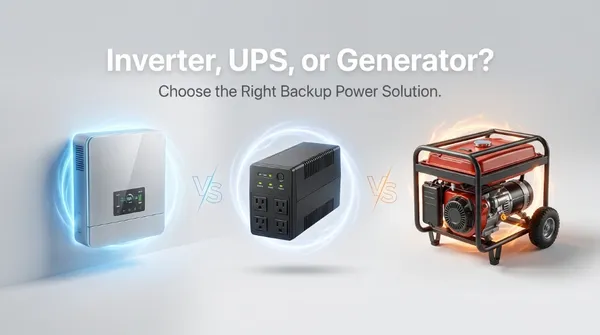
Inverter, UPS, or generator: which is best?
Backup basics

Inverter, UPS, or generator: which is best?

Three ways to keep the lights on, and which one fits your outages and your budget.

7 min read · Updated
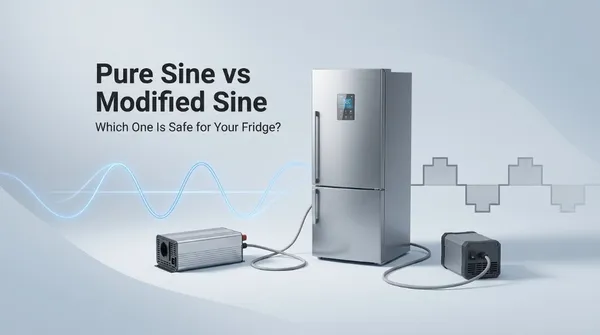
Pure sine vs modified sine: what your fridge needs
Inverters

Pure sine vs modified sine: what your fridge needs

The wave shape your fridge and electronics need, and when the cheaper option is safe.

5 min read · Updated
Common inverter buying mistakes, and how to avoid them
Buying tips

Common inverter buying mistakes, and how to avoid them

The seven mistakes that trip inverters and waste money, and the fix for each one.

6 min read · Updated
What size inverter do you need to run an air conditioner?
Cooling

What size inverter do you need to run an air conditioner?

What it really takes to run an AC on backup, and why the battery is the hard part.

6 min read · Updated
How to make your inverter battery last longer
Batteries

How to make your inverter battery last longer

Simple habits that add years to a battery, and the ones that quietly kill it.

5 min read · Updated
Tubular vs lithium batteries: which is worth it?
Batteries

Tubular vs lithium batteries: which is worth it?

Usable capacity, lifespan, and true cost, and which battery is cheaper over its life.

6 min read · Updated
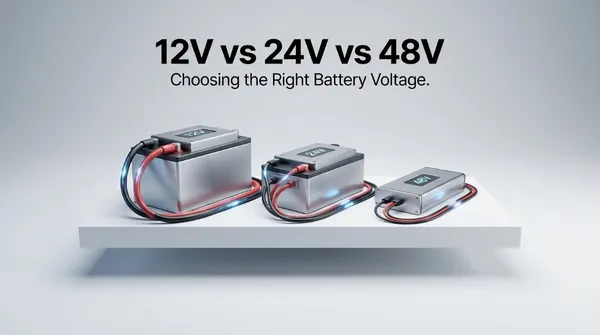
12V vs 24V vs 48V: which system voltage?
Sizing

12V vs 24V vs 48V: which system voltage?

Why higher voltage means less current, thinner cables, and lower losses, and which to pick.

6 min read · Updated
How much solar do you need to beat load-shedding?
Solar

How much solar do you need to beat load-shedding?

Size your panels and battery from your real daily energy use, without the sales pressure.

6 min read · Updated
How to read your electricity bill (and cut it)
Energy

How to read your electricity bill (and cut it)

Units, tariff slabs, and the appliances driving your bill, plus how to bring it down.

6 min read · Updated
FAQ

Frequently asked questions

Which calculator should I start with?

Start with the inverter size calculator to find the inverter and battery voltage you need. If you do not know an appliance’s wattage, use the appliance wattage calculator first, then the battery backup time calculator to see how long a bank will last.

Are the calculators really free?

Yes. Every calculator and guide on InverterWise is free, with no sign-up and no personal details needed. The site is supported by advertising.

How accurate are the results?

They are solid planning estimates built on standard engineering math and typical appliance values. Always confirm against the rating plate on your own equipment, and use a licensed electrician for installation.

Who is behind InverterWise?

The guidance is authored and reviewed by Engr. Syed Farrukh Anwar, a Registered Professional Electronics Engineer, whose credentials you can verify on the independent registers linked from the author page.

Engr. Syed Farrukh Anwar

Written by

Registered Professional Electronics Engineer (PEC ELECTRO/15141)

A licensed practitioner with boots-on-the-ground experience across South Asia and the Middle East, designing and commissioning high-yield solar arrays and backup systems for some of the harshest thermal environments on Earth. InverterWise exists to give you the straight engineering facts, minus the sales talk.